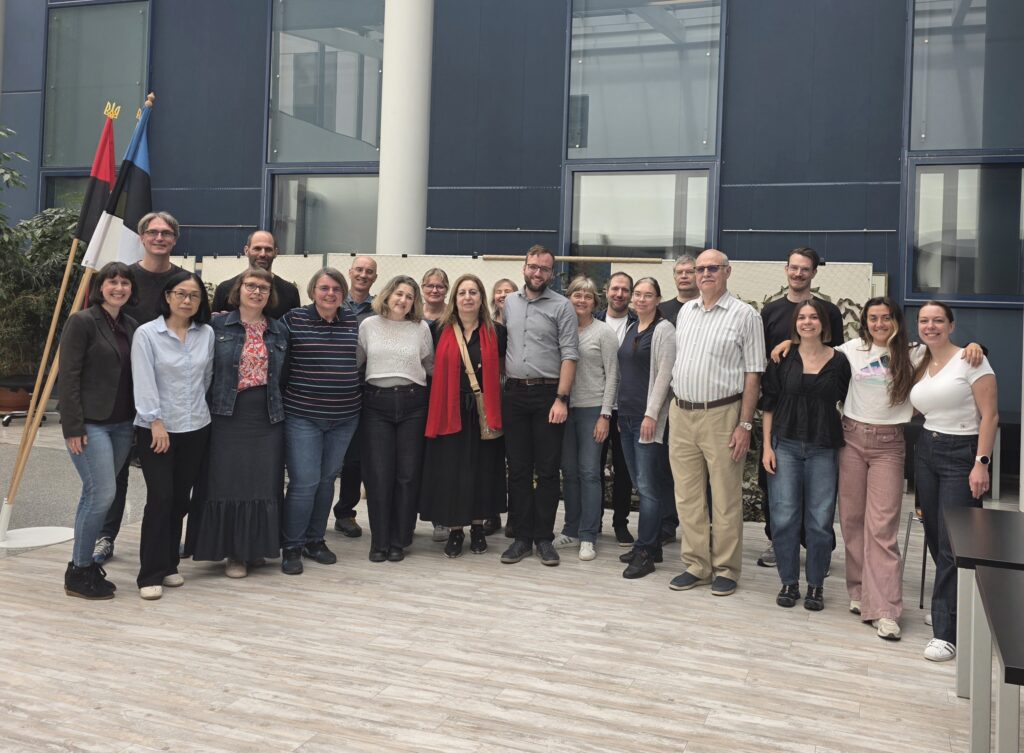
The STOP project members recently met in Tartu, Estonia (hosted by the University of Tartu’s Institute of Molecular and Cell Biology, thanks to Prof. Angela Ivask). This provided an opportunity to review the status of the project as we approach the completion of the planned work in November 2026 (the end of the project having been postponed by three months in the hope that data from the winter period would be more useful for statistics of efficacy from the field trials in nursing homes of several antimicrobial coatings developed by the project). The focus of the project has moved from developing and characterising new antimicrobial coatings, to better understanding how well they work in practice (our chosen use cases being work surfaces and tabletops in nursing homes, and doorknobs for lavatories in a university), and what impact any widespread use of the new materials might have upon microbes or the environment.
Although the development even of the most mature coatings from the project is at an early stage (demonstration), the project members are now thinking more seriously about possible commercial use cases, and the roadmap to pass regulatory requirements and obtain sufficient development funding for the next stage.
The final meeting of the project will be hosted by BAM (the German Bundesanstalt für Materialforschung und -prüfung) in November, and will include a workshop to which representatives from companies and the broader research community will be invited, with the aim of discussing and initiating follow-up work.